
How Long Does Wooden Furniture Last? Durability Guide

How Long Does Wooden Furniture Last? Durability Guide
When you invest in a solid wood bed, dining table, or sofa, you are not just buying a product—you are bringing home a long‑term companion. Wooden furniture has a very different lifespan compared to fast, disposable pieces made from particleboard or plastic, and understanding that difference helps you choose smarter and save money in the long run.
In this guide from Keshav Craft Inc, we will break down how long wooden furniture really lasts, what affects its durability, and how you can keep your favorite pieces strong and beautiful for decades. Along the way, we will focus on key topics like wooden furniture lifespan, furniture durability, solid wood vs engineered wood, and long‑term value so you can make confident decisions for your home.
1. What Is the Average Lifespan of Wooden Furniture?
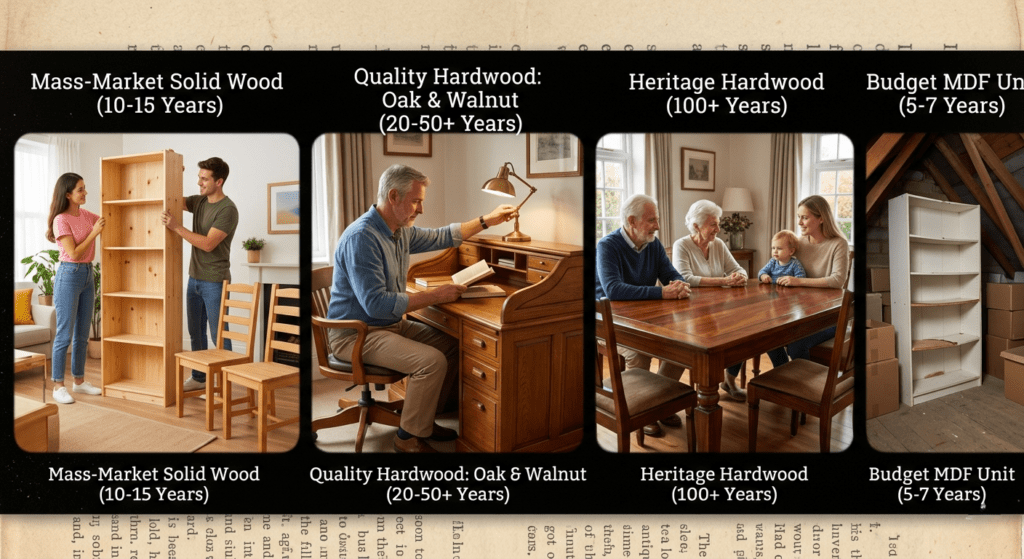
Different studies and brands share a wide range, but one thing is clear: well‑made solid wood furniture easily outlives most other materials.
Everyday solid wood pieces (like basic mass‑market furniture) usually last 10–15 years before showing visible aging such as fading, scratches, or minor cracks.
Quality hardwood furniture—made from teak, oak, mahogany, sheesham, or walnut—can last 20–50+ years with basic care, and often more than 100 years when properly maintained.
Many antique wooden tables and cabinets you see today have already crossed the 100‑year mark, proving how strong natural wood can be over time.
To put it simply, wooden furniture lifespan is measured not just in years but in generations. While a budget MDF unit may need replacement in 5–7 years, a well‑built solid wood piece from a trusted maker like Keshav Craft Inc can become something your children and even grandchildren use.
2. Solid Wood vs Engineered Wood: Which Lasts Longer?
One of the biggest questions buyers ask is: “Should I buy solid wood or engineered wood?” Both have their place, but they behave very differently over time in terms of furniture durability.
Lifespan Comparison
| Material type | Typical lifespan | Notes on durability |
|---|---|---|
| Solid hardwood (teak, oak, sheesham, walnut) | Around 30–100+ years with proper care. | Can be sanded, repaired, refinished many times. |
| Softwood (pine, cedar) | Around 20–40 years under normal use. | Slightly softer surface, but still long‑lasting with care. |
| Engineered wood (plywood, HDF, high‑grade board) | Around 20–30 years depending on quality and care. | Good stability in humidity; edges must be protected. |
| MDF / low‑quality particleboard | Often 7–15 years or less. | Prone to swelling, sagging, and damage if exposed to moisture. |
How They Age
Solid wood develops a natural patina—small color changes, grain character, and gentle wear that actually make it more beautiful over time.
Engineered wood can be strong and stable, especially in humid spaces, but it usually cannot be sanded and refinished multiple times like solid wood.
Low‑grade boards, which are common in cheap “look‑like‑wood” furniture, are difficult to repair once swollen or broken; they are often treated as disposable pieces.
At Keshav Craft Inc, we prioritize solid hardwoods and high‑quality construction methods because they deliver real long‑term value. This means your furniture durability doesn’t just look good in photos—it holds up in everyday life.
3. Key Factors That Decide Wooden Furniture Lifespan
Even the best timber needs the right design, joinery, and environment. Here are the main factors that control how long wooden furniture lasts in real homes.
3.1 Type of Wood
Hardwoods like teak, oak, mahogany, and sheesham are naturally dense and resistant to wear, insects, and moisture, which is why they are often rated for 50–100+ years.
Softwoods such as pine or cedar are lighter and easier to dent but still offer 20–40 years when crafted well and used correctly.
Locally popular species like sheesham are known in India for higher resistance to daily wear compared to MDF or standard engineered boards.
3.2 Construction Quality
How a piece is built is just as important as which wood is used.
Strong joints (like mortise‑and‑tenon, dovetails, or finger joints) keep the frame tight and safe even after years of movement.
Adequate thickness of legs, rails, and panels prevents warping or bending under weight.
Quality fasteners and adhesives reduce the chances of squeaking, wobbling, or loosening over time.
Handcrafted furniture from workshops like Keshav Craft Inc is usually designed to handle heavy daily use—kids jumping on beds, guests leaning on dining chairs, and frequent rearranging—without losing stability.
3.3 Usage and Load
The way you use a piece greatly affects furniture durability.
A dining table that hosts family meals three times a day faces more stress than a side table used to hold a lamp.
Sofas, beds, and chairs have a more demanding duty cycle; average lifespans for upholstered seating are 7–15 years mainly because fabrics and foams wear out faster than the wood frame.
Overloading shelves or using a chair as a ladder repeatedly can shorten its life.
3.4 Climate and Environment
Wood reacts to temperature and humidity.
Direct sunlight can fade finishes and cause surface cracks over time.
High humidity or frequent contact with water leads to swelling, loosening of joints, and sometimes fungal or termite issues if the wood is not treated.
Air‑conditioned rooms with very dry air can slowly dehydrate wood, making it more brittle unless periodically conditioned with oils or polishes.
3.5 Maintenance Habits
Regular, gentle care is the simplest way to extend wooden furniture lifespan.
Dusting, cleaning with mild products, and using coasters or mats protect the finish.
Tightening screws and checking for wobble prevents bigger structural issues later.
Occasional polishing or refinishing refreshes protection and appearance, adding many years of service
4. How Long Do Different Furniture Pieces Usually Last?
While every home is unique, industry averages give a helpful reference for planning your next purchase.
| Furniture piece | Typical lifespan with good care | Notes on durability |
|---|
| Furniture piece | Typical lifespan with good care | Notes on durability |
|---|---|---|
| Dining table (solid wood) | Around 15–20+ years, often much longer. | Top may need refinishing after heavy use. |
| Wooden dining chairs | Around 10–15+ years. | Joints and legs need periodic tightening. |
| Bed frame (solid wood) | Around 10–15+ years for structure, longer for headboard and frame. | Slats may occasionally need replacement. |
| Wooden wardrobe / cabinet | 20–40+ years in stable climate. | Doors and hinges may require minor adjustments. |
| Coffee table / side table | 15–25+ years. | Susceptible to scratches and liquid rings without coasters. |
| Engineered wood storage units | Around 7–25 years depending on quality and humidity. | Vulnerable edges and fastener zones. |
These numbers are not limits but guidelines. Many households use the same family dining table or bed for decades, and with careful restoration, those pieces can stay functional and beautiful far beyond the average furniture lifespan.
5. Why Wooden Furniture Is a Smart Long‑Term Investment
In a world of “buy now, replace soon,” wooden furniture stands out as a slow, steady, and smart investment.
5.1 Cost per Year, Not Just Price Tag
A cheaper board‑based wardrobe might sound attractive today, but if it needs replacement in 7 years, you end up paying more over time than you would for a solid wood piece that lasts 25–50 years. When you divide the price by the number of years of use, quality wood almost always offers a better cost‑per‑year value.
5.2 Repairable and Upgradable
Scratches can be sanded.
Color can be changed with stain or polish.
Hardware like handles and hinges can be upgraded without replacing the entire piece.
This repairability is a major advantage of wood over plastic or very low‑grade boards, which often go straight to the landfill when damaged.
5.3 Sustainability and Conscious Living
Global furniture trends show a clear shift towards natural, durable materials like wood as buyers move away from short‑term purchases and look for sustainable solutions. Longer‑lasting furniture means fewer replacements, less waste, and a smaller environmental footprint—aligning with modern eco‑conscious lifestyles.
6. Practical Tips to Extend Your Wooden Furniture Lifespan
Here are simple, real‑world steps you can follow at home to keep your furniture durable for years
Keep furniture away from direct harsh sunlight to prevent fading and surface cracks.
Avoid placing solid wood directly next to heat sources like radiators or constantly running heaters.
Use coasters, trivets, and placemats under hot or wet items on tables to protect the finish.
Wipe spills immediately with a soft, dry cloth—standing water is the enemy of wood.
Dust regularly with a microfiber cloth to avoid micro‑scratches caused by grit.
Use only mild, wood‑safe cleaners; avoid harsh chemicals or very wet mops.
Check screws, bolts, and joints every few months; tighten gently if you notice any wobble.
For high‑traffic pieces like dining tables or sideboards, consider professional polishing or refinishing every few years to renew the protective layer.
In humid regions or monsoon season, use dehumidifiers or moisture absorbers inside wardrobes to protect clothes and the wood both.
If you see signs of termites or severe warping, call a professional early—timely treatment can save the piece.
one consistently, these small habits dramatically increase furniture durability and keep your investment looking fresh and premium.
7. How Keshav Craft Inc Designs for Durability
At Keshav Craft Inc, we don’t look at furniture as a short‑term trend. We design every bed, table, and cabinet to serve your home for many years.
While each collection is different, our core durability principles include:
Preference for solid hardwoods and high‑grade materials chosen for strength and grain stability.
Time‑tested joinery techniques that keep frames tight and safe, even under daily family use.
Finishes selected not only for beauty but for resistance to stains, moisture, and everyday wear.
Designs that allow maintenance and repair—so your furniture can adapt with your life rather than being replaced.
When you see a Keshav Craft Inc piece, you are not just seeing furniture; you are seeing years of use, memories, and stories waiting to happen. That is the real meaning of wooden furniture lifespan and true furniture durability.
If you are planning a new home, upgrading one room, or looking for a single statement piece that will stay with you for years, explore the handcrafted wooden collections at Keshav Craft Inc. They are built to age gracefully, not quickly, so you buy once and enjoy for a long time.